
Stone Painting Course
The Program Focus
Painting on stone is both one of the oldest and most contemporary forms of self-expression. Unlike a flat canvas, stone is a three-dimensional, eternal object that challenges the artist to work with its unique shape, weight, and geological history.
Questions You Will Answer
The Heritage of Stone
How did our ancestors use ochre and charcoal to create sacred petroglyphs in caves like Altamira? What are the secrets of the 16th-century masters, like Sebastiano del Пьомбо, who used the natural veins of marble and slate to mimic clouds and waves?
Contemporery Fine Art vs. Craft
How to transition from simple decorative pebbles to Contemporery Art? We explore the works of modern masters who transform stones into hyper-realistic animals or surreal conceptual objects.
Technical Durability
How do you ensure that paint never chips, cracks, or fades? We will master the layering techniques necessary for the stone to be handled freely and remain an 'ultimate' durable art object.
The Philosophy of Form
How can a crack, depression, or the natural contour of a rock become a vital part of your composition? You will learn to 'see' the hidden image within the raw material.
Program Content and Technical Mastery
Surface Preparation and Leveling
Finding a perfectly flat stone is rare. You will learn to engineer your own surface by creating specialized primers and grounds. We cover materials that allow you to level uneven surfaces or create a specific texture over the stone, ensuring professional paint adhesion on even the 'slickest' minerals.
Miniature and Multi-Layer Painting
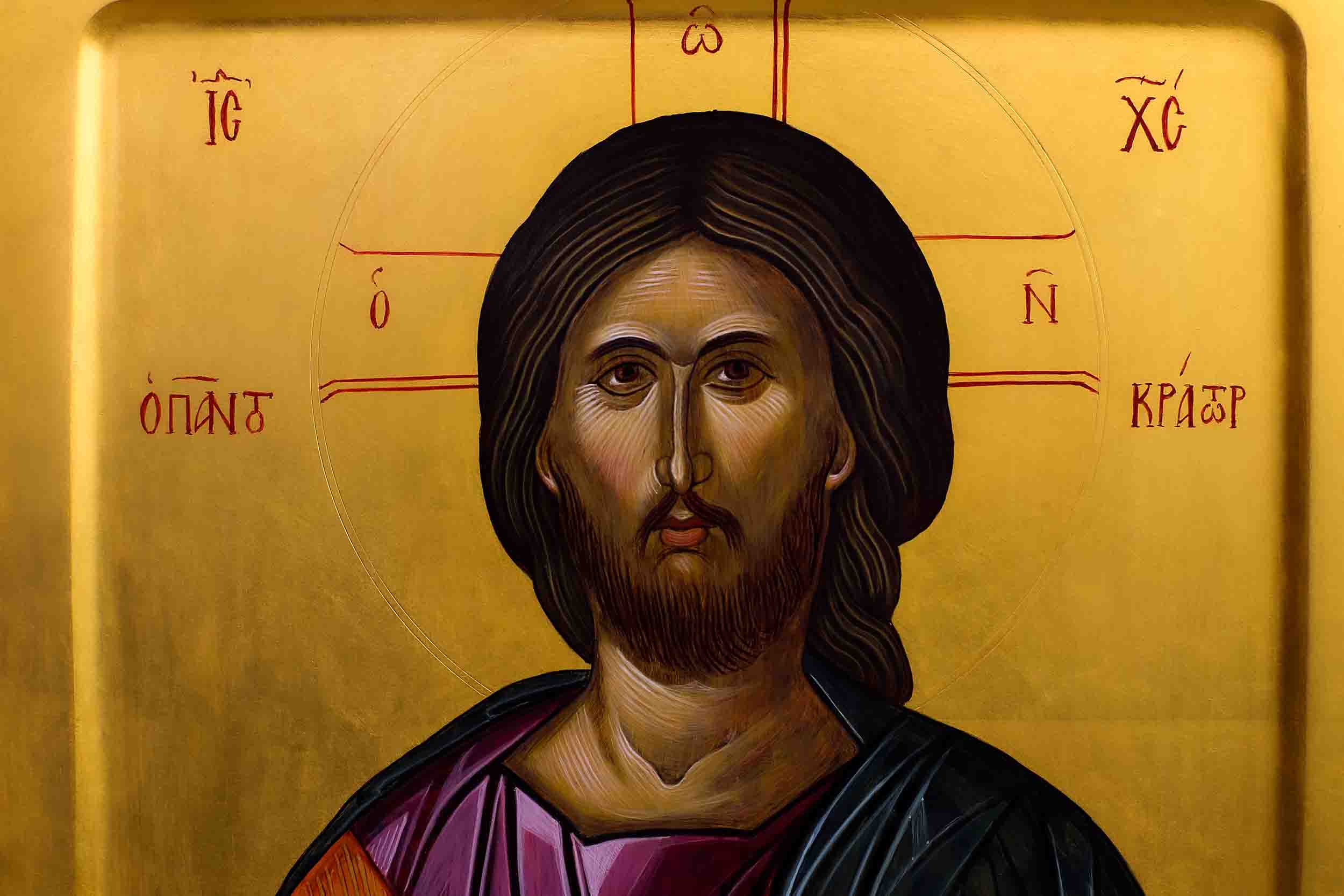
Working on stone often involves miniature painting, requiring extreme patience and precision. You will master the sequential application of layers using various media: Oil, Acrylic, Tempera, or even Watercolor. This process includes detailed sketching and building volume through glazing, similar to classical iconography and academic drawing.
3D Thinking and Problem Solving
The course develops 'volumetric' thinking. Unlike a flat sheet of paper, a stone requires you to account for a 360-degree view and a non-linear surface. This skill is essential for solving complex artistic problems related to irregular shapes and three-dimensional textures.
Artistic and Philosophical Heritage
Mastering stone painting provides a powerful foundation for design and construction. The patience and precision gained here are directly applicable to other irregular objects and modern industries. In the future, students can apply these skills in Architectural Decor (customizing marble or granite interiors), Jewelry Design (miniatures on semi-precious gems), and Game Development—where a deep understanding of geological textures and light interaction is vital for realistic 3D texturing. This course transforms a simple natural element into a sophisticated medium for conceptual and narrative art.
Course Duration and Individual Pace
The full curriculum is structured as a comprehensive path of 40 double sessions or 80 academic hours, which includes the student's essential self-work. However, as these are private individual sessions, the total time required to master the material is flexible; it adapts entirely to your personal progress, artistic background, and the time you dedicate to practice. There are no rigid deadlines and no grades; the focus is exclusively on your individual mastery of the craft and the quality of your artistic development.
Format and Logistics
The training is conducted as private individual sessions with the teacher traveling to the student's studio or home, for maximum comfort and efficiency. You choose your package of 1, 5, or 10 lessons. Note that all necessary materials and equipment are not included in the session cost. Lessons are conducted in Basel, Basel-Landschaft, and bordering suburbs of Germany and France.
Program Content and Technical Mastery
Surface Preparation and Leveling
Finding a perfectly flat stone is rare. You will learn to engineer your own surface by creating specialized primers and grounds. We cover materials that allow you to level uneven surfaces or create a specific texture over the stone, ensuring professional paint adhesion on even the 'slickest' minerals.
Miniature and Multi-Layer Painting
Working on stone often involves miniature painting, requiring extreme patience and precision. You will master the sequential application of layers using various media: Oil, Acrylic, Tempera, or even Watercolor. This process includes detailed sketching and building volume through glazing, similar to classical iconography and academic drawing.
3D Thinking and Problem Solving
The course develops 'volumetric' thinking. Unlike a flat sheet of paper, a stone requires you to account for a 360-degree view and a non-linear surface. This skill is essential for solving complex artistic problems related to irregular shapes and three-dimensional textures.
Artistic and Philosophical Heritage
Mastering stone painting provides a powerful foundation for design and construction. The patience and precision gained here are directly applicable to other irregular objects and modern industries. In the future, students can apply these skills in Architectural Decor (customizing marble or granite interiors), Jewelry Design (miniatures on semi-precious gems), and Game Development—where a deep understanding of geological textures and light interaction is vital for realistic 3D texturing. This course transforms a simple natural element into a sophisticated medium for conceptual and narrative art.
Course Duration and Individual Pace
The full curriculum is structured as a comprehensive path of 40 double sessions or 80 academic hours, which includes the student's essential self-work. However, as these are private individual sessions, the total time required to master the material is flexible; it adapts entirely to your personal progress, artistic background, and the time you dedicate to practice. There are no rigid deadlines and no grades; the focus is exclusively on your individual mastery of the craft and the quality of your artistic development.
Format and Logistics
The training is conducted as private individual sessions with the teacher traveling to the student's studio or home, for maximum comfort and efficiency. You choose your package of 1, 5, or 10 lessons. Note that all necessary materials and equipment are not included in the session cost. Lessons are conducted in Basel, Basel-Landschaft, and bordering suburbs of Germany and France.
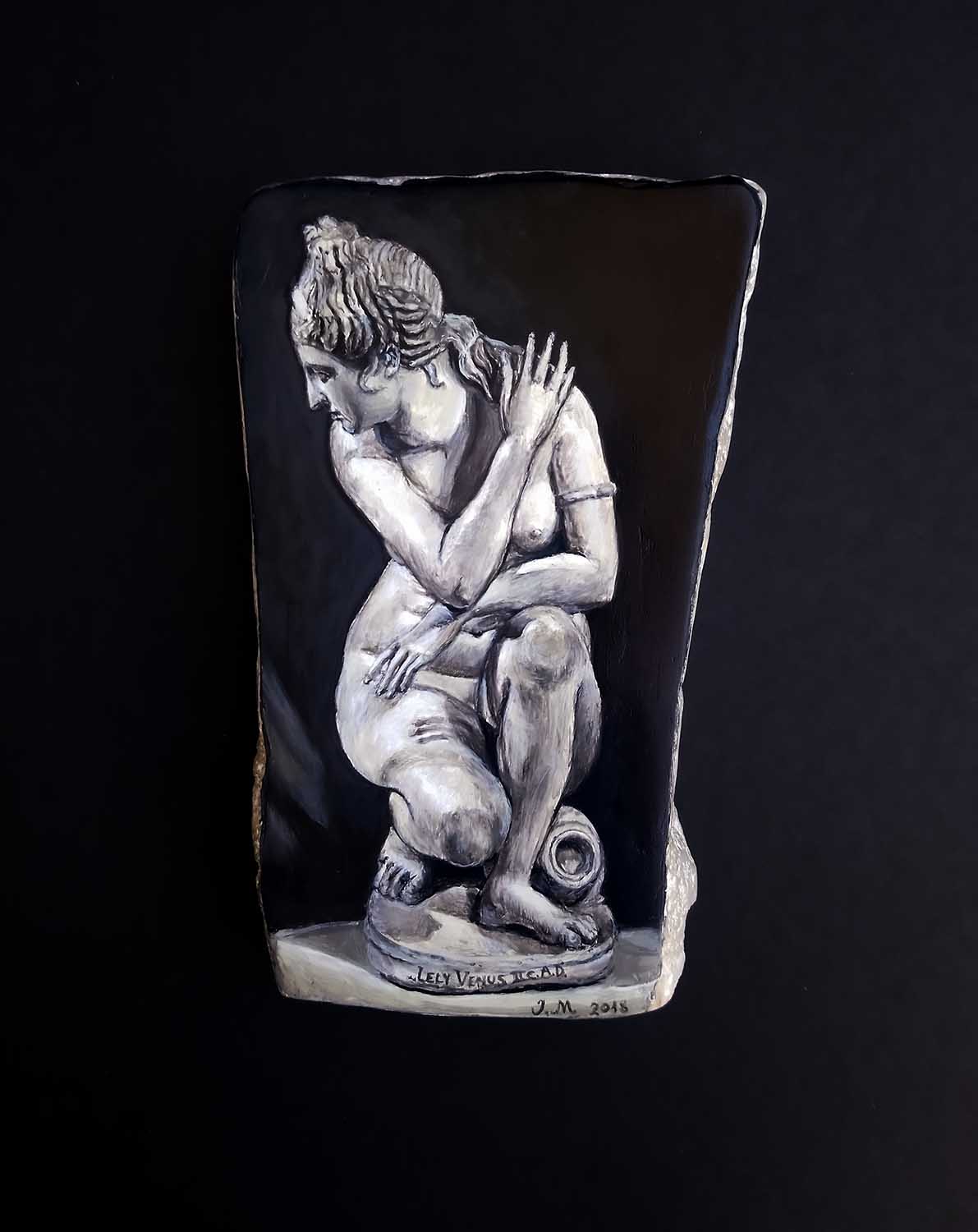
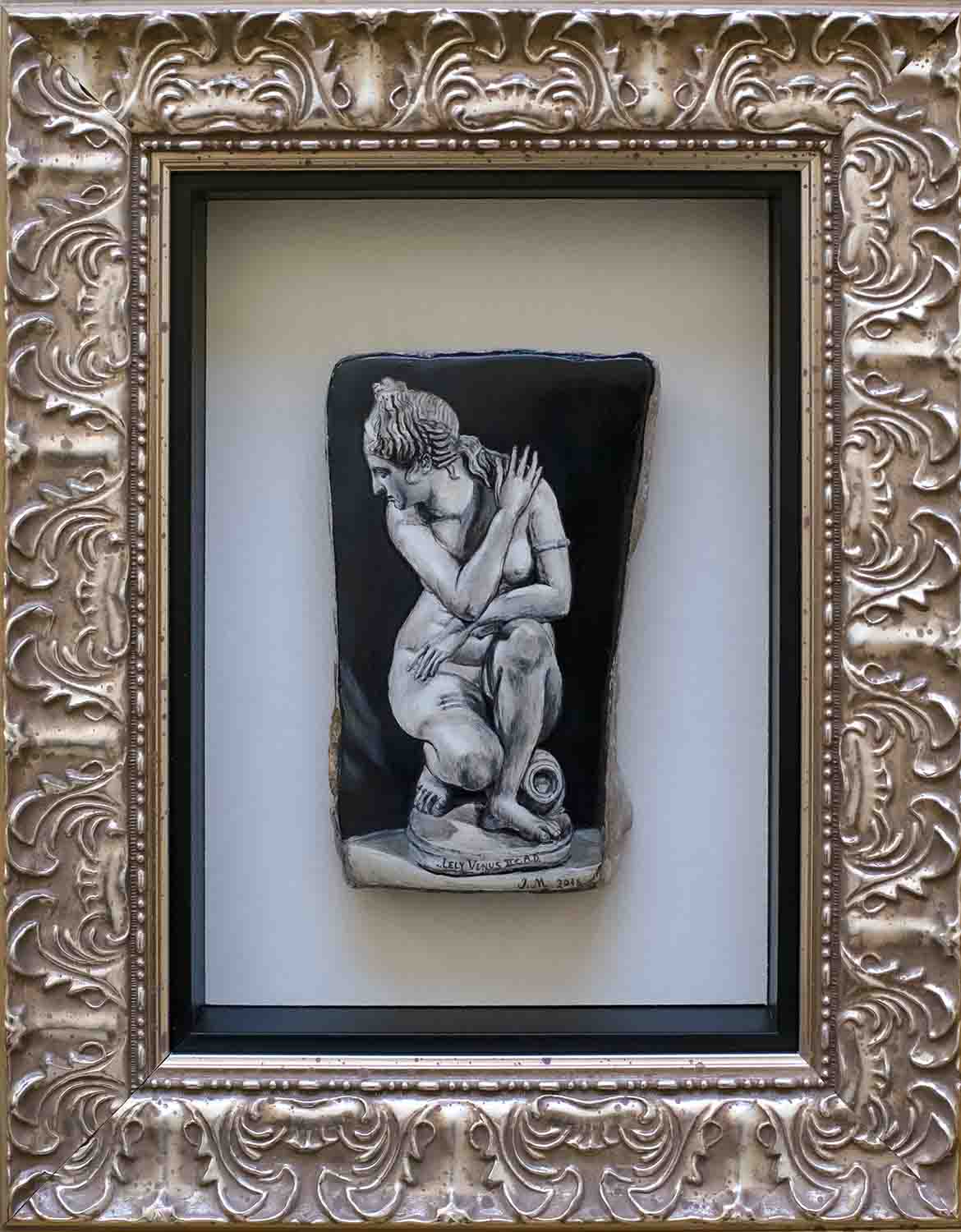
Lely Venus. Acrylic on Ancient Roman Marble. Artist: Ilya Medvedev